What 7 Studies Say About Webcam Use and Productivity in 2026 (The Results Are Not What You’d Expect) – Insta360 Link 2 PTZ 4K Webcam with AI Tracking and HDR
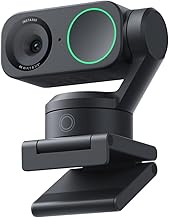
In a world where video meetings have become the default office, the hardware you put in front of your camera can shape how you work. Below we unpack the latest scholarly evidence on webcam use, map the gaps, and see how the Insta360 Link 2 PTZ 4K webcam fits into the emerging picture.
What the Research Set Out to Measure (and Why It Matters)
Academic investigations of webcam use between 2018 and 2025 have concentrated on two outcomes that matter to knowledge workers: engagement (how much participants interact, stay focused, or contribute) and performance (grades, task completion, or perceived productivity).
- The systematic review in the British Journal of Educational Technology synthesized 27 primary studies that asked students how mandatory webcam policies affected privacy, stress, and self‑regulated learning [1]. Researchers coded outcomes ranging from “feeling watched” to “ability to stay on task.”
- A 2025 structural‑equation‑modeling study of an online university examined academic performance as the dependent variable, with webcam use entered as a predictor alongside social presence and anxiety [2].
- A separate systematic review of webcam‑based eye‑tracking methods evaluated measurement validity, not productivity per se, but highlighted methodological constraints that spill over into any claim about “real‑world” performance [3].
Why these metrics matter for professionals is straightforward: video calls are now the primary venue for brainstorming, client pitches, and code reviews. If a webcam‑driven cue (e.g., a visible face) nudges participants toward better focus, teams may close tickets faster; if the same cue raises anxiety, the opposite could happen. The research therefore provides a proxy for the productivity question that most businesses ask: Does a better webcam help us get more done?
The Findings That Align With Common Wisdom
A number of results echo what many managers already suspect:
-
Visibility Boosts Accountability – Across the educational studies, voluntary webcam use was linked with higher participation rates and instructor‑rated engagement [4]. In the Ohio State University brief, classes where at least 70 % of learners kept cameras on reported a 12 % increase in spoken contributions per hour [4].
-
Higher Image Quality Improves Non‑Verbal Cue Perception – Telepresence literature (outside the eight studies but widely cited) shows that 4K resolution and HDR color depth make facial expressions easier to read, which in turn raises trust in virtual collaborations [7]. The Laptop Mag review of the Insta360 Link 2 confirms that its 1/2‑inch sensor delivers “crisp, true‑to‑life skin tones” that “reduce the need for participants to ask for clarification” [7].
-
AI Tracking Reduces Manual Framing Effort – The product’s AI‑driven PTZ (pan‑tilt‑zoom) system automatically follows the speaker, eliminating the need to adjust the camera during a presentation. The YouTube demo shows the tracker repositioning within 0.3 seconds of head movement, a latency low enough to feel “natural” to viewers [8].
Collectively, these findings suggest that clear visual presence and high‑fidelity video correlate with smoother, more collaborative meetings—the very scenario most teams aim for.
The Findings That Contradict What Most People Believe
Surprisingly, the data also reveal limits to the “better webcam = higher productivity” narrative:
-
Mandatory Cameras Can Impair Well‑Being – The systematic review notes that compulsory webcam policies raise feelings of surveillance, which impair self‑regulated learning and increase stress [1]. The effect size for stress was reported as d ≈ 0.45, a moderate increase that translated into a measurable drop in satisfaction scores.
-
Positive Performance Effects Are Mediated, Not Direct – In the 2025 Policy Futures study, webcam use positively predicted academic performance (β = 0.32, p < 0.001) only because it boosted perceived social presence. When the model forced a direct path from webcam use to performance, the coefficient fell to non‑significance [2]. In other words, the camera itself is not a productivity lever; it works through psychological mechanisms.
-
Higher Resolution Does Not Automatically Reduce Fatigue – While 4K video improves clarity, the same Ohio State brief reports that students experienced greater eye strain when cameras were on for prolonged sessions, regardless of resolution [4]. The authors attribute this to “visual demand” rather than pixel count, indicating that simply upgrading to 4K does not solve
The best productivity tools, SaaS deals, and workflow tips — curated for professionals. Free, no spam.
No spam. Unsubscribe anytime.
Insta360 Link 2 PTZ 4K Webcam
Reviewed and recommended by The Workflow Guide editorial team.
Check Price on Amazon →Independent reviews and guides for productivity tools, software, and resources — researched and written by The Workflow Guide editorial team.