How you sound on a call, a podcast, or a video carries more weight than how you look. People forgive a mediocre picture; they tune out bad audio within seconds. A dedicated microphone — even an inexpensive one — is the fix.
How to choose
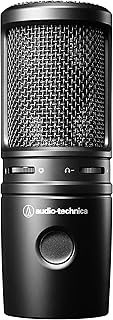
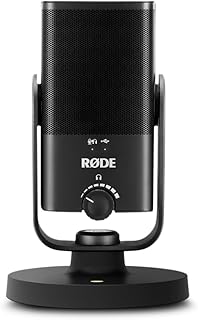
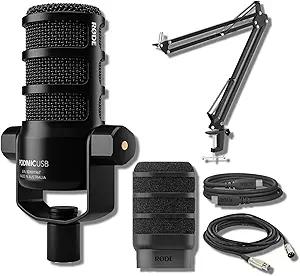
- Dynamic vs condenser is the decision that matters. Dynamic mics (Shure MV7+, RODE PodMic USB) reject room echo, keyboard noise and HVAC hum — the right default for a normal, untreated room, which is most people. Condenser mics (RODE NT-USB Mini, Elgato Wave, AT2020USB-X) sound richer but capture everything, so they need a quiet, soft space.
- USB vs XLR. USB plugs straight into a laptop and is all most people need. XLR needs an audio interface but scales further. A 2-in/2-out USB interface (Focusrite Scarlett Solo, MOTU M2) is plenty for voice and podcasting — check it has enough clean gain for your mic (quiet dynamic mics like the SM7B need ~60dB or a booster). Some mics, like the MV7+, do both.
- On-mic headphone jack. Lets you monitor yourself with zero latency. Worth having.
- Companion software. This is where USB mics live or die — real-time EQ, compression and noise reduction (Shure MOTIV, RODE Central) make a bigger difference than the capsule itself.
- A stand or boom arm is not optional. Desk stands transmit every keyboard thump; a boom arm keeps the mic close and off the desk.
What matters less
Sample rates above 48 kHz, 24-bit vs 16-bit, and polar-pattern switching (only useful if two people share one mic). For spoken voice, every current mic clears the bar.
Start here: our best USB microphones guide.


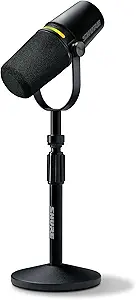
Shure MV7+ USB-C & XLR Podcast Microphone
OBS-certified podcast mic with Auto Level Mode, real-time denoising, LED touch panel, and both USB-C and XLR connectivity.
Free Checklist
The Home-Office Setup Checklist.
Connection, audio, light, camera, desk and power, in the order that matters. Free 2-page PDF, no ongoing newsletter.
No spam. Unsubscribe anytime. Privacy Policy